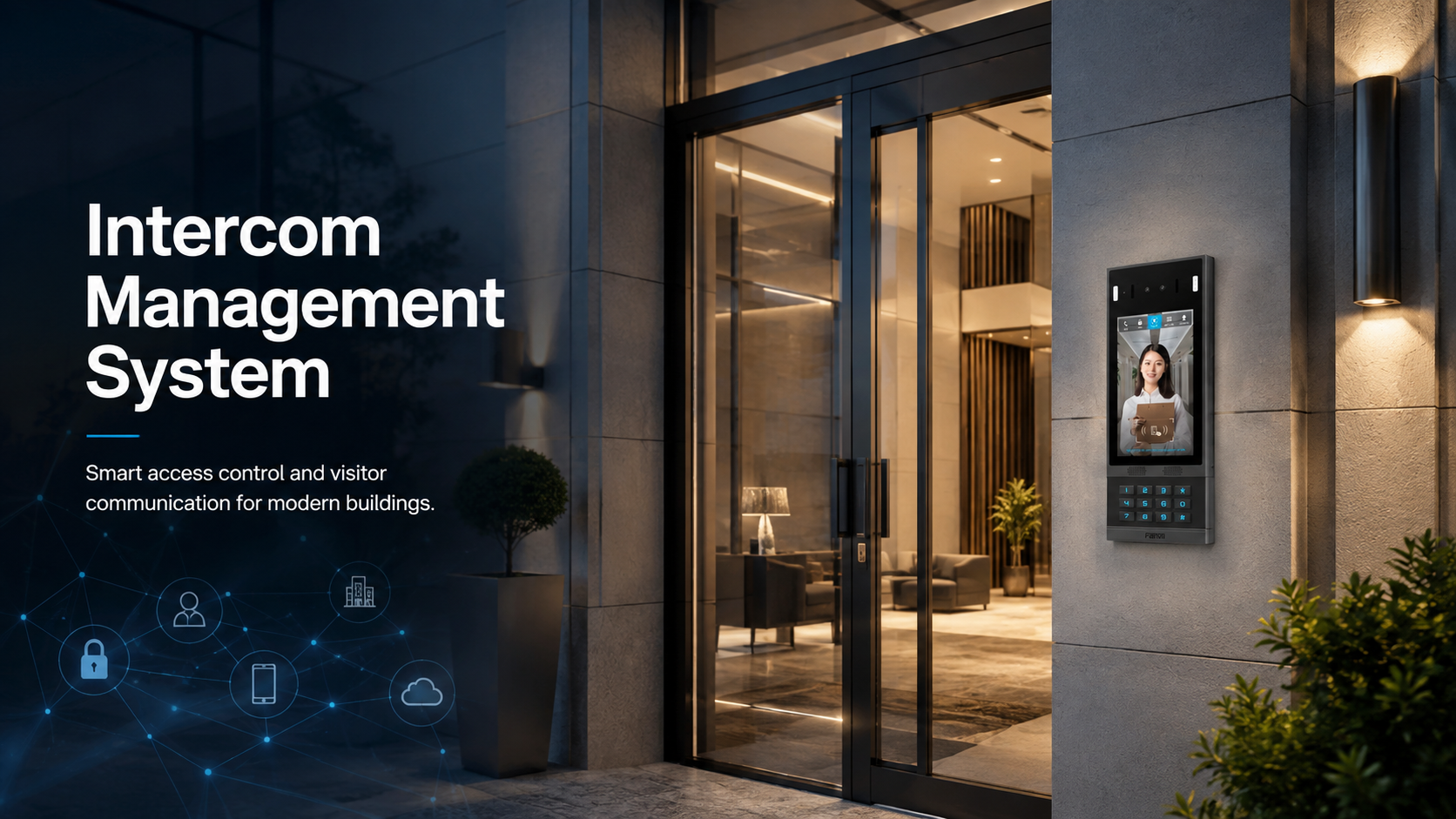
Intercom building entrance

Building access, simplified

A clearer way to manage your intercom system.

Intercom Management brings buildings, units, residents, devices, and communication workflows together in one secure workspace.

Direct Unit Number Dialing

  • Eliminates outdated buzz codes.
  • Visitors simply dial the resident’s unit number to initiate a call.
  • Enhances security by preventing unauthorized code sharing and simplifying the user interface.

Open Door Notification

  • Residents receive an instant alert when their door is remotely unlocked.
  • Provides peace of mind by confirming successful access, even if the resident does not answer the intercom.

Continuous Audio After Door Unlock

  • Maintains communication between the resident and visitor after the door is opened.
  • Allows additional verification or instructions, ensuring smooth and secure entry.

Direct unit dialing and smart intercom connectivity

Key Features and Ideas

The system utilizes state-of-the-art digital communication to address the limitations of traditional intercom systems, offering intuitive, secure, and scalable functionality.

Direct Unit Number Dialing

  • Eliminates outdated buzz codes.
  • Visitors simply dial the resident’s unit number to initiate a call.
  • Enhances security by preventing unauthorized code sharing and simplifying the user interface.
Open Door Notification

  • Residents receive an instant alert when their door is remotely unlocked.
  • Provides peace of mind by confirming successful access, even if the resident does not answer the intercom.

Continuous Audio After Door Unlock

  • Maintains communication between the resident and visitor after the door is opened.
  • Allows additional verification or instructions, ensuring smooth and secure entry.

One-Button Access to Management or Security

  • Dedicated call buttons for direct access to building management or security staff.
  • Available to both residents and visitors at any intercom station.
  • Ensures fast assistance in case of emergencies, deliveries, or general inquiries.

Multi-Device Call Acceptance with Flexible Routing

Intercom calls can be answered on multiple devices, including:

  • Home phone (landline or VoIP)
  • Cell phone
  • Mobile app
  • In-unit video door display
  • PC or laptop (softphone or web portal)

Custom call routing logic:

  • Simultaneous ring: All devices ring at the same time.
  • Sequential ring: Devices ring in a defined order (e.g., door display, then cell, then PC).

Ensures every call is delivered and answered with maximum flexibility and reliability.


Technology and system advantages

Technological Advantages

Our digital-first approach significantly reduces infrastructure complexity while improving functionality and long-term maintainability.
No In-Unit Cabling Required

  • Operates entirely over IP-based communication.
  • Eliminates the need for dedicated in-unit wiring.
  • Ideal for both new developments and retrofit projects.

Utilization of Existing Digital Infrastructure

  • Integrates seamlessly with building-wide digital phone systems or VoIP networks.
  • Minimizes installation time and cost by leveraging existing wiring and internet access.

Advanced connectivity and mobility

Advanced Connectivity and Mobility

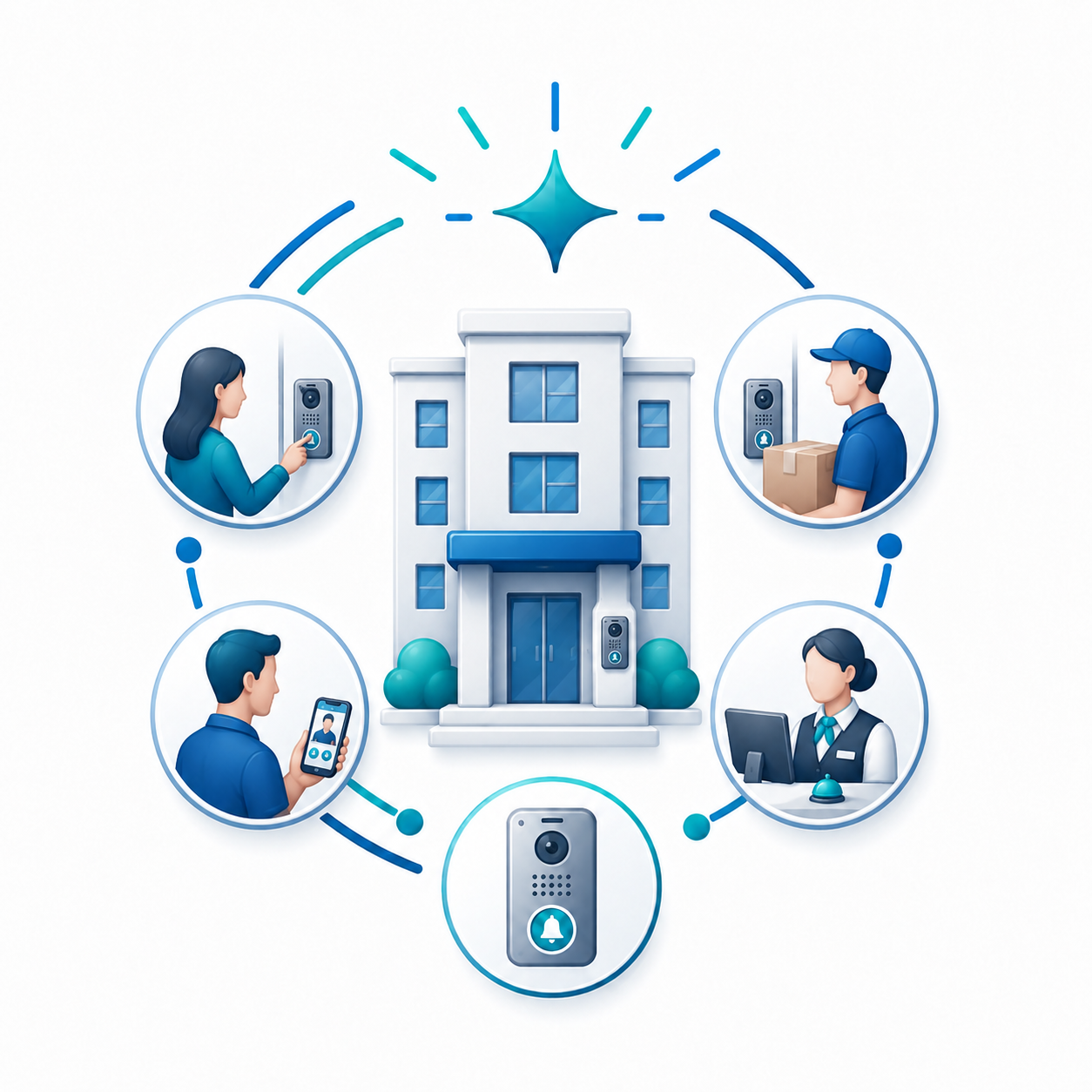
Designed with modern lifestyles in mind, the system offers mobile access and high-quality video integration.
Integrated Video Calling

  • Enables residents to see and speak with visitors before granting access.
  • Improves resident confidence and deters unauthorized entry attempts.

Mobile App Access

  • Residents can receive intercom calls directly on their smartphones, including both audio and video.
  • Supports remote door unlocking and call management from anywhere in the world.

No Roaming Charges

  • Uses data over Wi-Fi or mobile internet connections instead of traditional voice calls.
  • Residents avoid roaming charges while enjoying full intercom functionality globally.

Typical smart-building intercom use cases

Typical Use Cases

  • Residential buildings (visitor communication)
  • Office buildings (reception and internal communication)
  • Warehouses (gate control and loading dock)
  • Educational and medical institutions (hallway stations, emergency buttons)